
The Secret Behind Powerful AI Responses
In 2025, Artificial Intelligence (AI) is everywhere — from writing tools like ChatGPT to design platforms like Canva AI and productivity apps like Notion AI. But have you ever wondered why some people get amazing results from AI tools while others end up with generic or confusing responses?
The answer lies in one skill: Prompt Engineering.
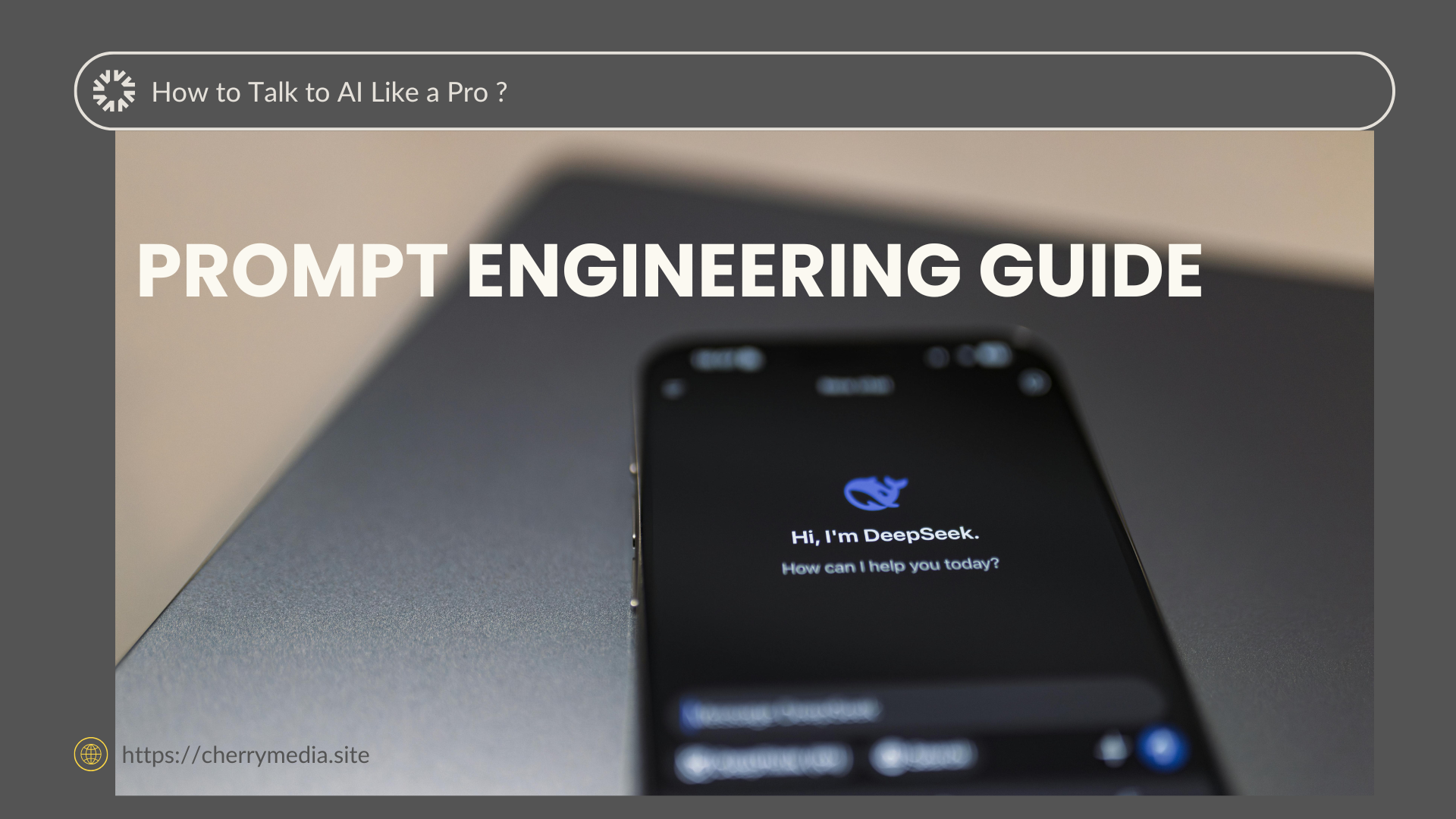
Prompt engineering is the art of crafting precise, well-structured instructions (prompts) that guide AI to generate the exact outcome you want. Whether you’re creating content, coding, designing, or brainstorming ideas, learning prompt engineering can dramatically improve the quality and speed of your results.
In this guide, you’ll learn how to master prompt engineering step by step — even if you’re new to AI.
1. What Is Prompt Engineering?
Prompt engineering is the process of communicating effectively with AI tools through clear, structured prompts. Think of it as talking to AI in its language.
When you type a question or command into an AI tool, your words act as instructions. The more detailed, specific, and contextual your prompt, the better the AI’s output.
For example:
❌ “Write about AI.”
✅ “Write a 200-word blog introduction explaining how AI tools can help small businesses save time and money.”
The second prompt gives direction, tone, and purpose — allowing AI to respond more accurately.
Insight: Good prompts save time, improve accuracy, and reduce editing effort.
2. Why Prompt Engineering Matters?
With thousands of AI tools emerging every year, understanding how to prompt them effectively has become a core digital skill.
Here’s why it matters:
-
Saves Time: A strong prompt can give you the perfect output in one go.
-
Boosts Creativity: You can guide AI to explore unique perspectives.
-
Improves Quality: Well-structured prompts yield high-quality, human-like results.
-
Makes You Stand Out: In a world where many people use AI, prompt mastery helps your content or project shine.
In short, prompt engineering turns AI from a basic assistant into a creative partner.
3. The Structure of an Effective Prompt
A well-written prompt usually includes five key parts:
-
Role – Define who the AI should act as.
Example: “Act as a professional blog writer.” -
Task – Specify what you want it to do.
Example: “Write a 1000-word blog post about AI tools.” -
Context – Provide background information or purpose.
Example: “It’s for a site called AI Hub targeting beginners.” -
Format – Tell AI how to structure the answer.
Example: “Include headings, subheadings, and bullet points.” -
Tone & Style – Describe the voice or mood you want.
Example: “Use a friendly and motivational tone.”
Combine these, and you get a professional, detailed prompt.
✅ Example of a Perfect Prompt:
“Act as a content writer for AI Hub. Write a 1000-word SEO blog post about ‘AI Tools for Beginners’. Use a friendly tone, include headings, examples, and a conclusion.”
4. Practical Examples of Good Prompts
Here are examples across different areas to help you get started:
For Content Creation
-
“Write a YouTube script explaining 5 free AI tools for productivity, with timestamps and examples.”
-
“Generate 10 blog title ideas about AI marketing trends in 2025.”
For Design Tools (like Canva or Leonardo AI)
-
“Create a futuristic AI-themed poster with a blue gradient background and digital circuit patterns.”
-
“Design a clean, minimalistic logo for a brand called AI Hub.”
For Productivity Tools
-
“Summarize these meeting notes into 5 action points for the marketing team.”
-
“Generate a weekly content schedule for an AI-focused website.”
For Coding
-
“Write a Python script that automatically organizes files into folders by type.”
-
“Debug this JavaScript function and explain the changes.”
By experimenting with prompts like these, you’ll quickly learn how to “speak” to AI more efficiently.
5. Common Mistakes Beginners Make (and How to Fix Them)
Even skilled users sometimes make prompt errors. Let’s fix the most common ones:
❌ 1. Being Too Vague
-
“Tell me about AI.” → Too broad.
-
✅ “Explain AI in simple terms for a 12-year-old student.” → Specific and effective.
❌ 2. Forgetting Context
AI doesn’t know your goals unless you tell it. Always include your target audience or platform.
❌ 3. Ignoring Output Format
Ask for the structure you want. For example:
-
✅ “Write in 5 short bullet points.”
-
✅ “Format the text as a comparison table.”
❌ 4. Asking Multiple Unrelated Questions
Focus on one clear goal per prompt.
If you need multiple outputs, break your prompts into steps.
6. Advanced Prompt Techniques for Faster Results
Once you understand the basics, try these advanced strategies to get even better outputs:
A. Chain-of-Thought Prompting
Ask AI to show its reasoning process step by step.
Example: “Explain your reasoning step by step before giving the final answer.”
B. Role-Playing Prompts
Tell AI to take on a specific role.
Example: “Act as a digital marketing expert with 10 years of experience. Create a strategy for a new AI app.”
C. Iterative Prompting
Don’t settle for the first response. Ask follow-up questions to refine results.
Example: “Make it shorter and more engaging.” or “Add real-world examples.”
D. Multi-Modal Prompting (2025 Trend)
AI tools now handle text + image + audio prompts.
You can upload an image and ask:
-
“Describe this image and suggest a caption for social media.”
This makes AI tools even more powerful and intuitive.
7. Tools to Practice Prompt Engineering
To sharpen your skills, experiment with these AI platforms:
| Tool | Purpose | Why It’s Great for Prompt Practice |
|---|---|---|
| ChatGPT / GPT-5 | Text & content generation | Flexible and conversational |
| Claude.ai | Writing & analysis | Excellent for structured prompts |
| Canva Magic Studio | Design prompts | Visual creativity |
| Runway ML | Video generation | Great for creative storytelling prompts |
| Notion AI | Productivity | Organizes ideas efficiently |
Start with free versions and test how different prompts affect the outcome.
8. Future of Prompt Engineering
Prompt engineering is evolving fast. In 2025 and beyond, AI models are becoming more intuitive — but human creativity still drives the best results.
We’re already seeing trends like:
-
Natural Language Prompting: You talk to AI as naturally as to a human.
-
Prompt Libraries: Reusable templates for marketing, design, and writing.
-
AI Feedback Loops: Tools that auto-improve your prompts based on past performance.
If you master prompt engineering now, you’ll stay ahead as AI becomes even more integrated into daily work.
9. Final Thoughts: Mastering AI Starts with Better Prompts
AI is only as smart as the person using it. The difference between average and exceptional AI results lies in your prompt quality.
By practicing the art of prompt engineering, you can generate blog posts, videos, designs, and strategies faster than ever before.
We believe that prompt engineering is the #1 skill for the digital future.
So start small — test prompts, refine your results, and soon, you’ll be creating professional-level outputs with ease.
Your Next Step: Pick one AI tool today and craft 3 detailed prompts. You’ll be amazed how quickly your results improve!