As we settle into the first few days of 2026, the conversation surrounding the future of work has shifted from theoretical optimism to tangible reality. For decades, the five-day, 40-hour workweek has been the unshakeable bedrock of modern employment—a relic of the industrial revolution that has persisted long into the digital age. However, recent reporting, including a pivotal piece from The Washington Post released on New Year’s Eve 2025, highlights a transformative trend: Artificial Intelligence is no longer just a buzzword; it is the mechanical lever finally powerful enough to crack the four-day workweek code.
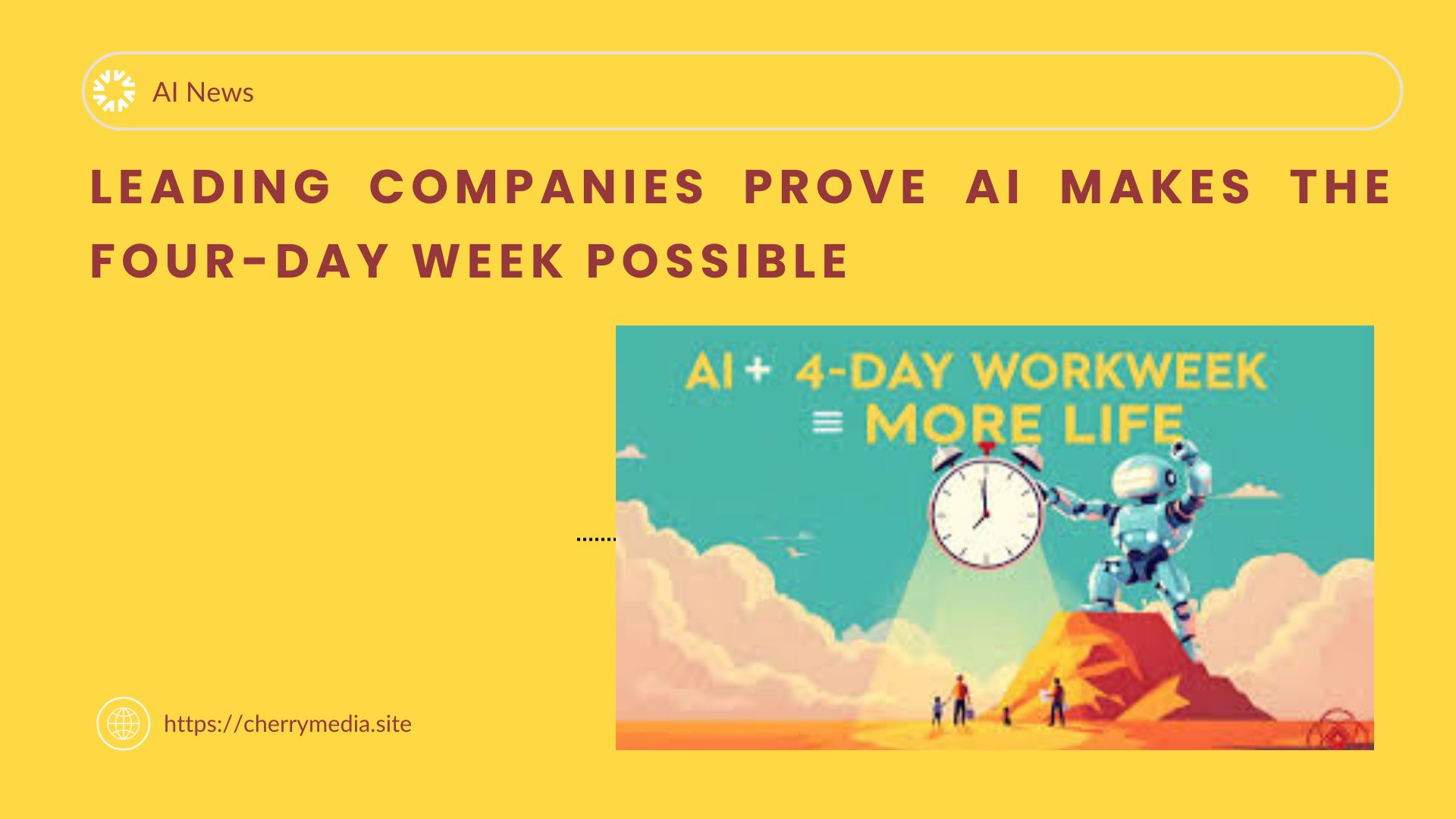
The premise is simple yet revolutionary. If AI can handle the drudgery—the data entry, the scheduling, the basic coding, and the preliminary drafting—human employees are freed to focus on high-value tasks. This efficiency gain is not just marginal; it is structural. We are witnessing a moment where “working smarter, not harder” is transitioning from a corporate cliché to an operational necessity. As we analyze the landscape of 2026, it becomes clear that the integration of generative AI into our daily workflows is the catalyst we have been waiting for to reclaim our time without sacrificing economic output.
The AI Productivity Dividend: Doing More with Less
The core argument for the four-day workweek has always battled against the “productivity paradox.” Employers feared that cutting hours by 20% (dropping from five days to four) would result in a proportional drop in output. In the pre-AI era, this fear was often justified. However, the rapid maturity of AI agents and large language models (LLMs) over the last 12 months has fundamentally altered this equation.
Automating the Mundane According to recent economic analyses, the average knowledge worker spends a staggering amount of time on “work about work”—answering emails, organizing files, and managing calendars. AI tools have now effectively absorbed these tasks. When an AI copilot can draft a client proposal in three minutes that used to take three hours, the need for a physically present 40-hour week evaporates. This “productivity dividend” is what forward-thinking companies are now reinvesting into their workforce in the form of time off.
The Efficiency Metric Recent data suggests that AI-augmented employees are upwards of 30% to 50% more efficient than their non-augmented counterparts of just a few years ago. This surplus efficiency effectively “pays for” the fifth day off. It is not about cramming five days of stress into four; it is about removing the friction that made five days necessary in the first place.
Industry Adoption: Who is Leading the Charge?
The shift referenced in The Washington Post and observed throughout the tech sector is not limited to niche startups in Silicon Valley. We are seeing a ripple effect across major industries, from finance to healthcare.
The Tech Sector’s “Beta Test” Major technology firms have been the bellwethers for this movement. Throughout late 2025, we saw several high-profile CEOs—from Zoom to Microsoft—allude to or implement condensed schedules facilitated by AI. These companies realized that in the war for talent, flexibility is a currency as valuable as salary. By leveraging AI to maintain coding and development velocities, these firms have maintained their competitive edge while offering a lifestyle benefit that was previously impossible.
Beyond Silicon Valley Perhaps most surprisingly, this trend is bleeding into traditional sectors. Law firms are using AI for discovery and contract review, tasks that previously required armies of junior associates working 60-hour weeks. Marketing agencies are using generative image and copy tools to slash campaign turnaround times. In these environments, the four-day week is becoming a viable retention strategy, preventing burnout in high-pressure industries.
The Human Impact: Mental Health and Retention
While the economic mechanics are fascinating, the human story is the most compelling aspect of this shift. The modern workforce is battling an epidemic of burnout. The promise of AI was often framed as a threat—”robots will take your jobs.” However, the narrative emerging in 2026 is one of partnership.
Reclaiming the Weekend A true three-day weekend changes the physiology of rest. Two days is often just enough time to recover from the previous week and prepare for the next, leaving zero time for genuine decompression or personal growth. Three days allows for a “reset.” Employees returning to work on Monday (or Tuesday) after a three-day break report significantly higher focus and morale.
The Loyalty Factor Companies adopting this model are seeing turnover rates plummet. In an era where remote work made switching jobs easier than ever, the “Golden Handcuffs” of 2026 are not stock options, but time. Employees are far less likely to leave a four-day employer for a five-day competitor, even for a pay bump. This stability reduces recruitment costs and retains institutional knowledge, further bolstering the economic case for the shorter week.
Challenges and the Road Ahead
Despite the optimism, the transition is not without hurdles. As The Washington Post noted, the distribution of these benefits is uneven. There is a risk of a “two-tier” workforce where knowledge workers enjoy AI-subsidized three-day weekends while service and manual labor sectors remain tethered to traditional schedules.
The Implementation Gap Implementing a four-day week requires more than just buying a ChatGPT subscription. It requires a cultural overhaul. Meetings must be ruthless or eliminated. Asynchronous communication must replace the “quick sync.” Managers must learn to measure output rather than hours in a seat. Without these structural changes, a four-day week can easily devolve into four 12-hour days, which exacerbates burnout rather than curing it.
The Economic Divide Policymakers in 2026 are now faced with the challenge of ensuring that the benefits of AI productivity are shared broadly. If AI creates massive wealth and time savings, how do we ensure that this doesn’t strictly accrue to shareholders? The conversation is moving toward how AI can elevate the quality of life for the average worker, not just the profit margins of the average corporation.
Conclusion: The Future is Flexible
The news from late 2025 serves as a significant mile marker in the history of labor. We are standing at the precipice of the most significant change to the work week since Henry Ford popularized the weekend in the early 20th century. AI has provided the tools to dismantle the archaic structure of the five-day week, proving that productivity is not a function of time, but of efficiency and innovation.
As we move deeper into this year, the question for businesses is no longer “Can we afford to move to a four-day week?” but rather “Can we afford not to?” The companies that embrace this AI-driven flexibility will define the future of industry, attracting the best talent and fostering a healthier, more sustainable way to work.
If you are looking to stay ahead of these digital trends and understand how to leverage media and technology for your business growth, you need a partner who understands the landscape of tomorrow.
Visit Cherry Media today to learn how we can help you navigate the changing tides of technology and media.