The transition from “chatting with AI” to “deploying AI” has officially reached its peak in 2026. As we discussed in our previous guide, the difference between an assistant and an agent is agency—the ability to take independent action. But to build these autonomous digital workers, you no longer need a PhD in Machine Learning.
A new generation of AI Agent Builders has emerged, offering visual canvases, “vibe coding” environments, and deep API integrations. Whether you are a solo founder or an enterprise CTO, choosing the right builder is the most critical decision you will make this year.
In this review, we dive deep into the 5 best AI agent builders of 2026, evaluated on their reasoning capabilities, integration depth, and ease of use.
1. FlowHunt: The Best Overall for Business Workflows
FlowHunt has secured its spot as the top-rated AI agent builder in 2026 by striking the perfect balance between power and simplicity. It is designed specifically for teams that need production-ready agents that actually do work rather than just talk.
-
Key Strength: Its Visual Flow Builder allows you to map out complex multi-step reasoning using a drag-and-drop interface.
-
Unique Feature: Native Retrieval-Augmented Generation (RAG). You can “train” your agent on your company’s PDFs, Google Docs, and spreadsheets in seconds.
-
Best For: Marketing and Operations teams building agents for lead qualification, automated research, and document analysis.
Pros:
-
SOC 2 and GDPR compliant (Enterprise-ready).
-
One-click deployment to WhatsApp, Slack, and web.
-
Multi-model support (mix GPT-5 with Claude 3.7 in one flow).
Cons: * Advanced API webhooks may require a slight learning curve for total beginners.
2. Vellum AI: The Enterprise Governance Leader
For large organizations where security and reliability are non-negotiable, Vellum AI is the gold standard. Vellum focuses on “Prompt-to-Agent” workflows that transition seamlessly from a simple idea to a governed AI application.
-
Key Strength: Observability and Versioning. It allows you to track exactly why an agent made a specific decision, making it invaluable for regulated industries like Finance and Healthcare.
-
Unique Feature: Evaluations (Evals). You can run regression tests to ensure that updating your AI model doesn’t “break” your agent’s logic.
-
Best For: Engineering and Compliance teams that need full control over the agent’s lifecycle.
3. CrewAI: The Best for Multi-Agent Orchestration
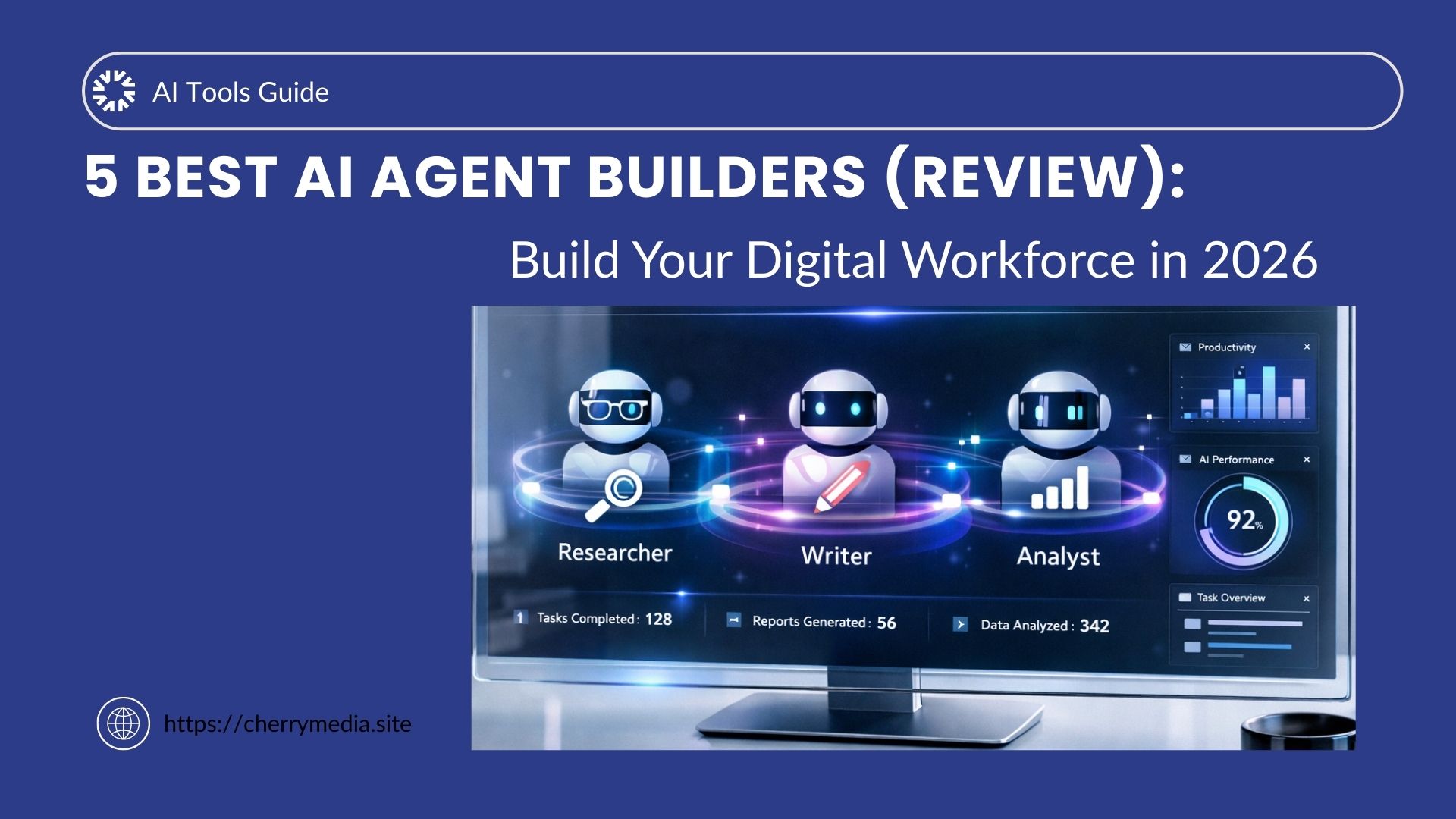
If your goal is to build a “team” of agents—a researcher, a writer, and an editor who all talk to each other—CrewAI is the best framework. In 2026, CrewAI has evolved from a developer-only Python library into a sophisticated platform with a visual design layer.
-
Key Strength: Role-Based Specialization. It excels at “Agentic Collaboration,” where agents pass tasks back and forth until the goal is met.
-
Unique Feature: Process Control. You can define if your agents should work in a sequence, in parallel, or in a hierarchical “manager-employee” structure.
-
Best For: Content agencies and R&D departments managing high-volume, multi-stage projects.
4. n8n (AI Agent Nodes): The Best for Automation Experts
n8n has long been a favorite for workflow automation, but its 2026 “AI Agent” nodes have turned it into a powerhouse for autonomous systems. It is the most extensible tool on this list.
-
Key Strength: Infinite Integrations. With over 500+ native nodes and the ability to add custom code, an n8n agent can “live” inside almost any software stack.
-
Unique Feature: Self-Hosting. Unlike most SaaS builders, you can host n8n on your own servers, keeping all your data entirely within your own firewalls.
-
Best For: Technical founders and “Citizen Developers” who want zero limitations on what their agents can touch.
5. Vertex AI Agent Builder (Google Cloud): The Best for Ecosystem Integration
For businesses already operating within the Google Cloud ecosystem, Vertex AI Agent Builder offers the most seamless “walled garden” experience. It leverages Google’s Gemini models and its massive infrastructure to provide high-speed, scalable agents.
-
Key Strength: RAG and Search Excellence. Because it’s Google, its ability to search and synthesize information from vast internal data stores is unmatched.
-
Unique Feature: Natural Language Configuration. You can “talk” to the builder to set up the agent, describing its personality and tools in plain English.
-
Best For: Large enterprises already using GCP who need deep integration with BigQuery and Google Workspace.
Comparison Table: 2026 AI Agent Builders
| Platform | Primary Use Case | Coding Level | Best Feature |
| FlowHunt | Business Automation | No-Code | Visual Workflow & RAG |
| Vellum AI | Enterprise Governance | Low-Code | Observability & Evals |
| CrewAI | Multi-Agent Teams | Mid-Code | Role-Based Collaboration |
| n8n | Complex Integrations | Low-Code | 500+ App Connectors |
| Vertex AI | Google Cloud Users | Mid-Code | Infrastructure & Search |
How to Choose the Right Builder for Your Business
Selecting a builder isn’t just about features; it’s about alignment. To find your match, ask your team three questions:
1. Who is the Builder?
If your marketing manager is building the agent, stick with a No-Code platform like FlowHunt. If your engineering team is leading the charge, the flexibility of CrewAI or n8n will be more rewarding.
2. What is the Data Privacy Requirement?
If you are handling sensitive customer data, you need the “Stealth Mode” or Self-Hosting capabilities found in n8n or the high-level compliance guardrails of Vellum.
3. How many “Steps” are in the Task?
For simple Q&A agents, almost any tool works. However, for “Agentic Workflows” that involve checking a database, sending an email, and updating a CRM, you need a builder with a strong Planning Engine like the one found in Vertex AI or FlowHunt.
The Future of Agentic Development
As we move deeper into 2026, the trend is moving toward “Small Language Models” (SLMs). These are highly specialized agents that run on less power but are much faster at specific tasks like “Invoice Extraction” or “Code Review.” The best builders are already allowing you to “hot-swap” these models based on the task at hand.
By choosing a platform that supports Model Agnostic development, you ensure that your digital workforce won’t become obsolete when the next “GPT-6” or “Claude 4” is released.
Conclusion
The era of manual, repetitive digital work is ending. The companies that thrive in 2026 will be those that successfully augment their human talent with a specialized fleet of AI agents.
Ready to deploy your first AI agent?
Visit Cherry Media, for more.